A Practical Guide to Getting Every Session Right

a practical guide to getting every session right header

You've heard infrared saunas can change how you feel, but the moment you're actually sitting inside one, questions start stacking up. Is it hot enough? Should I have eaten first? Why aren't I sweating yet?

Those questions are completely normal, and they point to something real: infrared saunas work differently from anything most people have experienced before. Where a traditional steam sauna surrounds you with overwhelming heat that you have to endure, an infrared sauna delivers a gentle, penetrating warmth directly into your skin and muscles, as the Cleveland Clinic describes it, without the suffocating air that makes traditional saunas feel like a test of willpower. The cabin stays cooler, somewhere in the range of 110°F to 140°F, yet your body responds as if it's working much harder than the ambient temperature suggests. You'll sweat heavily. Your core temperature rises. And because the heat doesn't overwhelm your respiratory system, you can actually breathe comfortably the whole time.

That gap between what your body is experiencing and what the room temperature suggests is exactly why infrared sauna use has its own learning curve. The rules you might carry over from a gym steam room or a traditional Finnish sauna don't always transfer. What you eat beforehand, what you wear inside, how long you stay, what you do when you step out, all of it plays out differently when the heat is working from the inside out rather than baking you from the outside in.

This guide covers everything you need to get the most out of your time in the sauna. You'll learn how to prepare your body and your unit before you start, what temperature ranges actually move the needle, and how long to stay in. You'll know what to wear and what to bring inside with you, what the physical experience is supposed to feel like, and what activities pair well with the heat. You'll understand how sweating works in an infrared environment and what to do if yours takes longer to arrive than expected. You'll get clear guidance on what to do in the minutes immediately after your session, whether essential oils and aromatherapy are safe to add, and which of your devices and wearables can handle the environment. If you're deciding between a home unit and a studio or spa setting, that comparison is here too.

Whether you just bought your first home sauna, you're preparing for your first studio visit, or you've been using one for months and want to know if you're leaving results on the table, this is where you get the full picture.

Preparation & Usage Guidelines

Whether you just bought your first home sauna, you're preparing for your first studio visit, or you've been using one for months and want to know if you're leaving results on the table, this is where you get the full picture.

Food and timing

Eating a full meal right before a session is a mistake you'll only make once. When digestion is actively competing for blood flow, your body has less capacity to manage heat, and the experience tends to feel sluggish or uncomfortable. A light meal or snack consumed around 60 to 90 minutes beforehand gives your digestive system enough time to settle without leaving you lightheaded from skipping food entirely.

Saunas.org recommends waiting 1.5 to 2 hours after any meal, which is the safer end of the range if you've eaten something substantial.

Eat light, eat early.

Alcohol is a firm no before any session. Healthline notes that drinking beforehand compounds dehydration and creates complications that heat only makes worse. If you've had a drink, skip the sauna that day.

Hydration

You'll lose a meaningful amount of fluid through sweat, so starting the session already behind on hydration makes every minute inside harder. Healthline recommends drinking 16 to 20 ounces of water before you go in. About thirty minutes before your session is a reasonable target, giving your body time to absorb it rather than sloshing around in your stomach when you sit down.

Skin prep

If you're coming from a workout or you've applied lotion, sunscreen, or makeup, a quick shower beforehand is generally a good idea. Products sitting on the skin's surface can affect the experience, and rinsing off before you enter keeps things clean and comfortable.

The pre-heat protocol

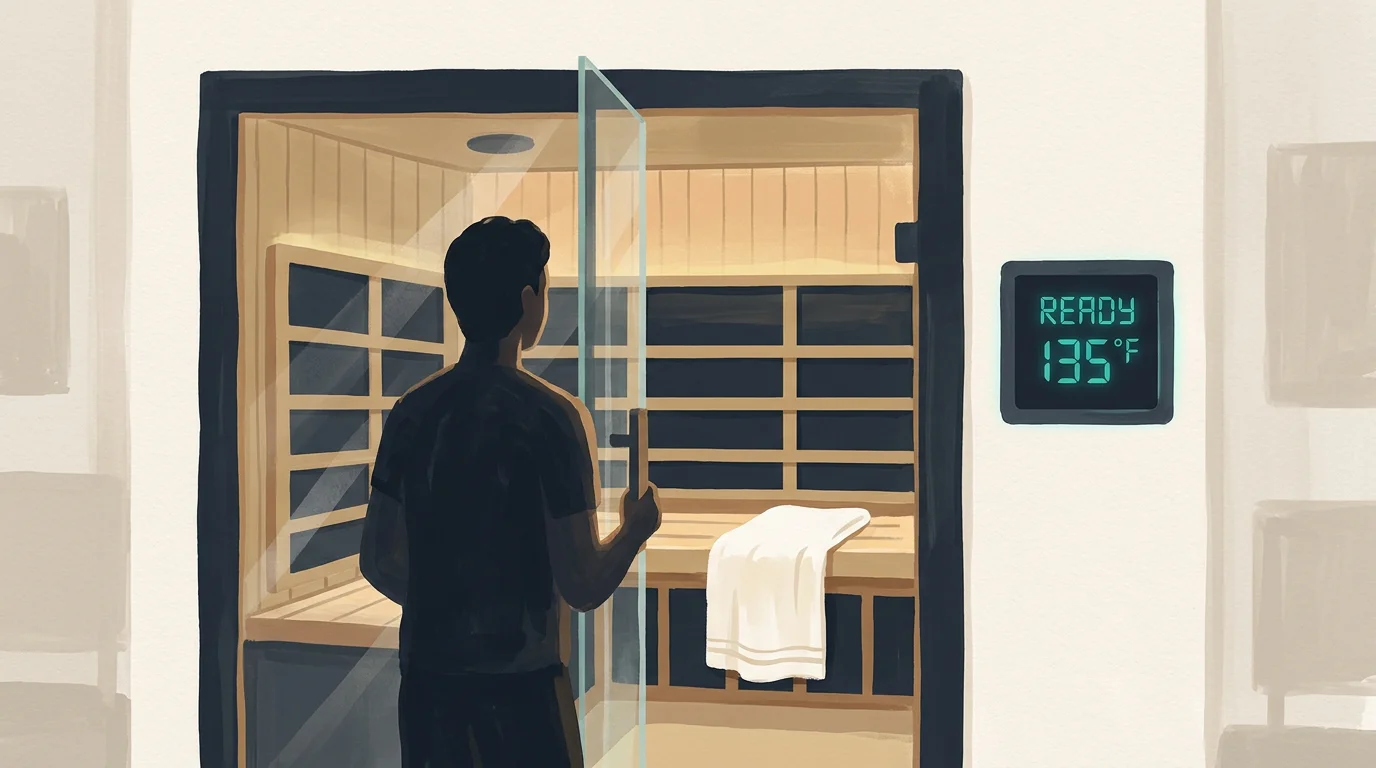
An infrared sauna needs time to reach operating temperature before you sit down, and skipping this step is one of the most common prep mistakes. The warm-up window required before entering, the infrared pre-heat protocol, typically runs around 10 to 15 minutes. Entering a cold or partially heated unit means your first several minutes are spent waiting for the heater panels to reach effective output. Most units signal when they're ready. Use that window to hydrate, change, and settle in mentally rather than sitting in a cabin that's still coming up to temperature.

Coming from the gym

If you've just finished a workout, give yourself 20 to 30 minutes before getting in. Your body is still dissipating heat from exercise, and adding infrared exposure on top of an already elevated core temperature increases the demand on your system. Let yourself cool down and rehydrate first.

Contrast therapy sequencing

Pairing infrared heat with cold exposure, a practice known as contrast therapy sequencing, has become popular in recovery contexts. The question of whether to do cryotherapy before or after a session is a real one, and the order matters. It is possible to use an infrared sauna after cryotherapy, but the transition deserves some thought. The cooling effect from cryotherapy pushes your body toward a calmer, more restful state, and following that immediately with infrared heat is a significant shift in demand. Many people find it more manageable to do infrared first and cold exposure afterward, letting the cold close the session on a calming note. If you have any cardiovascular concerns, it's worth checking with your doctor before combining the two modalities.

What to leave outside

Infrared saunas are not designed for steam. Pouring water on the heater panels as you might in a traditional sauna can damage the equipment and create hazards the unit isn't built to handle. The heat comes from the panels, and they're not designed for moisture contact.

Once your body and your unit are both ready, the time you spend inside can do what it's supposed to do. The preparation isn't elaborate, but it's the difference between a session that works and one that simply passes.

The preparation isn't elaborate, but it's the difference between a session that works.

Session Duration & Frequency

a practical guide to getting every session right 2

Once you're inside and the unit is up to temperature, the next question most people face is how long to stay. The honest answer is that it depends on where you are in the process, and the number that's right for a first session is quite different from the number that works three months in.

A useful way to think about this is through the session progression framework: a deliberate ramp from shorter beginner sessions toward longer, more frequent ones as your body adapts. It exists because the same 45 minutes that an experienced user finds restorative can genuinely overwhelm someone new to the practice. A first session at 45 minutes and a seasoned user's 45 minutes share only the clock time.

Starting out

Healthline recommends that healthy adults new to infrared sauna use keep sessions to 15 to 30 minutes while tolerance builds. The lower end of that range, around 15 to 20 minutes, is a reasonable starting point for your first few sessions. You're not undertiming yourself by keeping it shorter. You're building a foundation.

The Cleveland Clinic notes that sessions typically run 20 to 45 minutes once you've established that baseline, and getting there progressively is how you reach it without making every early session feel like a test.

For older adults or anyone who tends toward adverse reactions from heat, Healthline suggests keeping initial sessions to 5 to 10 minutes until you understand how your body responds.

Building frequency

Duration and frequency interact more than most people expect. A longer session creates a greater recovery demand on your body, meaning the physiological rest your system needs before the next heat exposure is proportionally higher. Push too long too soon, and your sessions start feeling like something to recover from rather than something to look forward to.

For beginners, starting with a few sessions per week gives your body time to adapt between exposures. As tolerance builds, most people find that 3 to 4 sessions per week hits a productive balance between consistency and adequate rest. That frequency holds up well across a range of goals, from general recovery to stress reduction.

For beginners, starting with a few sessions per week gives your body time to adapt between exposures. As tolerance builds, most people find that 3 to 4 sessions per week hits a productive balance between consistency and adequate rest. That frequency holds up well across a range of goals, from general recovery to stress reduction.

Experienced users who have been consistent for several months can often extend both dimensions, moving toward sessions in the 30 to 45-minute range and frequencies that reach 4 to 7 times per week, according to guidance from practitioners who work with regular sauna users.

The twice-a-day question

Searching "can I use infrared sauna twice a day" is common enough that it deserves a direct answer. According to both the Mayo Clinic and sources that track sauna research, twice-daily use lacks strong support, and the evidence suggests it offers no meaningful advantage over a single daily session. The recovery demand created by one session doesn't fully resolve in a matter of hours for most people, so the second session often adds load without adding benefit. For most people, once per day is already at the upper end of productive use.

Consistency over intensity

The single principle that holds across all experience levels is that consistency matters more than any individual session length. A reliable schedule of moderate sessions produces better results over time than sporadic long ones. Missing a week and compensating with marathon sessions is the pattern most likely to keep you from building real tolerance.

Knowing how long to stay and how often to come back gives you the structure. What happens inside the session, and whether you're running the unit at the right temperature, shapes how productive each of those sessions actually is.

Optimal Temperature Settings

Temperature is one place where the dial and the experience pull in opposite directions. You can set an infrared sauna to 150°F and feel far less overwhelmed than you'd expect from that number, while someone cranking it higher in search of a more intense session often ends up cutting the session short instead of extending it. Understanding why that happens makes the temperature question much easier to answer.

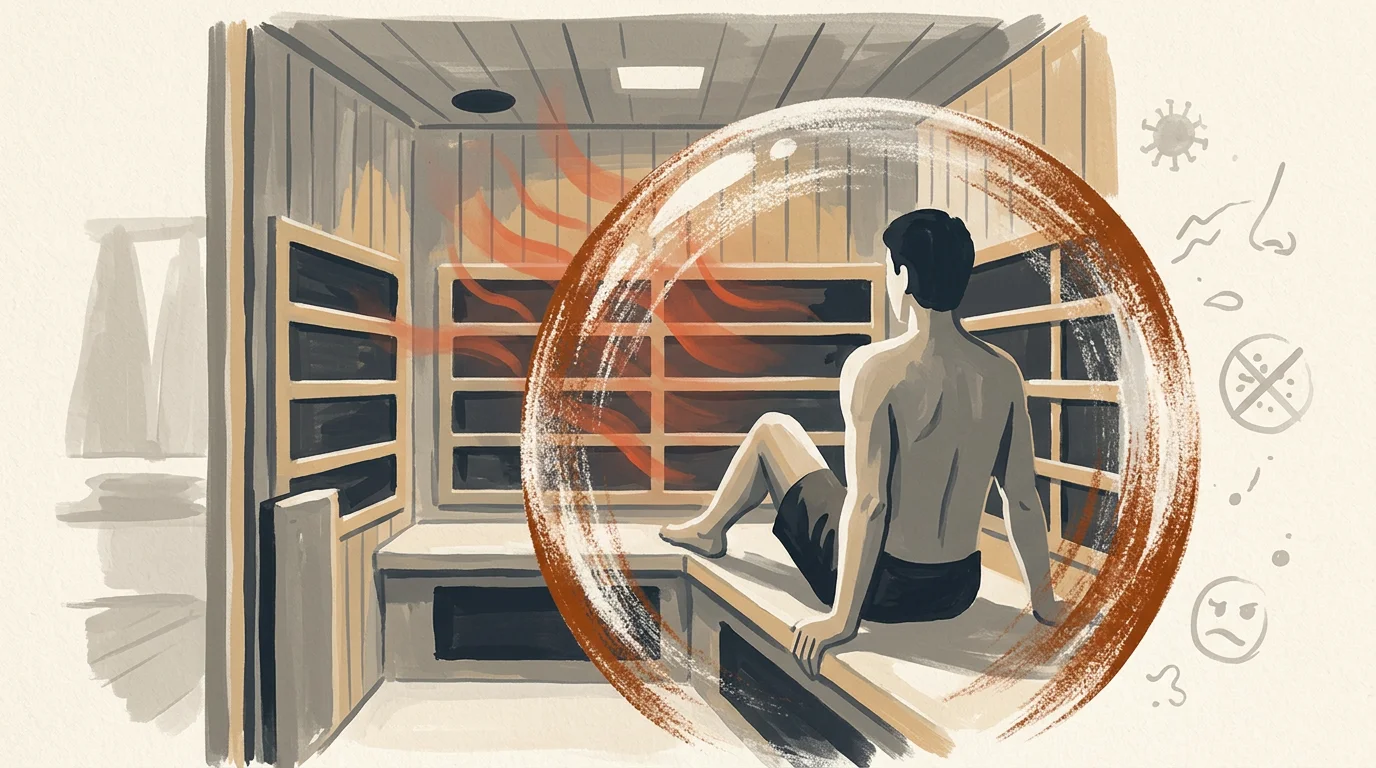
The mechanism behind it is radiant absorption: infrared wavelengths penetrate tissue directly rather than heating the surrounding air. The panels emit energy that your body absorbs at a cellular level, gradually raising your core temperature from the inside out. The air in the cabin stays comparatively mild, which is why the thermometer reading doesn't tell the whole story. A reading of 130°F in an infrared cabin and 130°F in a conventional sauna are two entirely different physical experiences, because in one case you're breathing superheated air and in the other, the air is largely incidental.

This is also why the effective operating range for infrared, the temperature window where the therapeutic response and your ability to stay inside it overlap productively, sits lower than most people expect. Sources, including the Cleveland Clinic, point to 120°F to 140°F as the range that balances comfort and effectiveness for most users. Therapeutic benefits are confirmed to occur within the 110°F to 140°F window, and at the lower end of that range, around 110°F to 130°F, continuous infrared exposure tends to penetrate more deeply. At those settings, the panels can maintain consistent output without interruption.

a practical guide to getting every session right 3

If you're just starting out, beginning in the 100°F to 120°F range gives your body time to acclimate before you move up. The Mayo Clinic emphasizes starting with lower temperatures, and the reasoning is straightforward: the benefits don't come from surviving the heat, they come from sustained exposure to it. A session you can complete at 110°F produces more than a session you abandon at 150°F.

The upper end of the dial is where things get counterproductive. Some infrared sauna models cycle their heating panels off above 130°F (54°C), which can actually reduce the consistency of infrared exposure even as the air temperature climbs. Above 150°F to 160°F, the risk of discomfort increases, and sources note the possibility of dehydration and heat-related effects at those temperatures, though individual tolerance varies considerably. Going higher doesn't translate to proportionally greater benefit for most users; it mostly compresses the time you can tolerate being inside.

Higher temperatures are not necessarily better. The goal is sustained exposure within a range your body responds to, not pushing through the hottest setting you can manage. A session at 130°F that runs its full duration is more productive than a session at 160°F that ends early.

Personal tolerance shapes the ideal number more than any fixed rule. Some people find 120°F more than sufficient; others work up comfortably to 140°F or slightly beyond over time. Starting conservatively and adjusting upward based on how your body responds, rather than targeting the highest number the unit can reach, is the approach that tends to work across experience levels.

What you wear inside the cabin affects how that heat reaches you, and it's a question with more variation in practice than most guides acknowledge.

What to Wear & Bring

Clothing affects how much infrared energy actually reaches your skin, and the difference between a well-chosen outfit and the wrong one shows up quickly once you're inside.

a practical guide to getting every session right 4

The principle at work is infrared fabric penetration: infrared wavelengths pass through some materials with minimal interference, while others block or scatter them significantly. Lightweight natural fabrics like cotton, linen, and bamboo allow a meaningful amount of that energy through to your skin while still absorbing sweat. Dense materials, and especially synthetics like polyester or nylon, reduce skin exposure noticeably and trap heat against the body in a way that impairs sweat evaporation rather than supporting it. What you wear can work with the session or against it.

The simplest option is nothing at all, which is what many regular users prefer for exactly that reason. If you'd rather wear something, loose cotton shorts, a lightweight cotton t-shirt, or a simple swimsuit all work well. Swimwear is a reasonable choice when comfort or modesty matters, though Sunstream Saunas notes that swimwear with synthetic fibers, metal hardware, or heat-absorbing dark dyes is worth avoiding. A plain cotton or bamboo swimsuit without metal components outperforms a technical performance suit in this environment. Regardless of what you wear, sit on a clean towel. It handles hygiene and catches the sweat that clothing doesn't.

On jewelry and accessories

Metal conducts and holds heat efficiently. Rings, necklaces, or bracelets that feel fine at room temperature can become genuinely uncomfortable during a session, so it's worth removing jewelry before you go in. Watches carry the same consideration.

Contact lens wearers have one more thing to weigh: the dry environment of an infrared cabin may dehydrate lenses over the course of a session. Removing them or wearing glasses avoids this issue.

For wireless earbuds, the combination of sustained dry heat and heavy sweating creates conditions that exceed what most earbuds are designed to handle. Leaving them outside is the simpler call.

Hair protection

Infrared heat is dry, and repeated exposure can draw moisture from hair over time. Pulling hair into a loose bun keeps it away from direct panel exposure and reduces the surface area absorbing heat. A dry towel wrapped loosely around the head works similarly. Applying a leave-in conditioner before entering gives hair some protection from moisture loss.

If you prefer more structured head coverage, a hat made from wool, linen, or cotton is an effective option. The practical distinction from traditional steam sauna use is worth noting: in a steam environment, a sauna hat protects against extreme overhead ambient heat. Infrared cabins heat directionally and evenly across the body, so head coverage is less about safety and more about managing cumulative hair dryness if that's a concern for you.

What to leave outside

A few items are better left outside regardless of how convenient they seem to bring in. Glass water bottles are worth avoiding since they can break if knocked over; a stainless steel or insulated bottle is a reasonable substitute if you want something on hand. Anything with adhesives, wax coatings, or plastic components may off-gas at elevated temperatures. Books and phones survive short sessions reasonably well in most cabins, but sustained heat will shorten the life of any electronics you bring in regularly.

A clean towel and minimal clothing that suits your comfort level covers everything the session itself requires.

Knowing what to wear sets the physical stage, but nothing fully prepares you for that first session like knowing what it actually feels like to be inside.

Expected Experience & Effects

a practical guide to getting every session right 5

Stepping into an infrared sauna for the first time is a bit like the moment a heating pad goes from barely noticeable to "oh, that's actually working," except the sensation spreads across your entire body at once. The air feels warm but breathable. There's no oppressive wall of heat to push through, no urge to gasp. What you notice first is a kind of enveloping warmth on your skin, subtle at the start, building steadily from beneath rather than pressing in from the surrounding environment.

This gradual build is known as thermogenic latency. It's the delay between entering the cabin and the onset of noticeable sweating or a meaningful rise in body temperature. Where a traditional steam sauna hits you immediately with saturating ambient heat, radiant absorption works differently. Your tissues absorb the energy directly, and your body's thermoregulatory response catches up over time. For most first-timers, that means the first five to ten minutes can feel mild enough to question whether anything is happening. Something is, just not at the pace most people expect.

Around ten to fifteen minutes in, according to guidance from Radiance Infrared, core temperature begins rising noticeably and sweating follows. The Cleveland Clinic confirms that infrared use raises core body temperature and increases heart rate, with that cardiac response resembling moderate exercise rather than exertion. You may feel your pulse pick up gently, a light warmth spreading to your face and chest, and skin flushing as circulation increases and blood vessels widen. These are not signs that something is wrong. They're the normal physiological sequence of a session progressing as it should.

Muscle relaxation often arrives before sweating becomes heavy. The Cleveland Clinic also notes that infrared use relaxes muscles and boosts blood flow, and many users describe a release of tension in the lower back, shoulders, and legs that sets in earlier than they expected. That quality of warmth, reaching into tissue rather than sitting on the surface, is what makes the experience feel different from sitting in a hot room. The heat has somewhere to go.

Sweating, once it begins, tends to be deep and thorough. First-timers occasionally find the volume of sweat surprising given how tolerable the air temperature felt. That's thermogenic latency resolving: the session was working from the start, the visible response just took time to catch up.

A small percentage of new users feel mildly lightheaded at some point during their first sessions. This is a normal, transient response as your cardiovascular system adjusts to the vasodilation and increased heart rate. Healthline recommends listening to your body for exactly this kind of signal. If lightheadedness appears, exit calmly, sit somewhere cool, and hydrate. Rocky Mountain Saunas recommends ending a session immediately if you experience dizziness, rapid heartbeat, nausea, or extreme skin redness. These aren't signs to push through. Treating them as clear exit cues from your first session forward makes infrared sauna use both safer and more sustainable.

The overall tone of the experience tends toward calm rather than intense. Many users report an endorphin-related mood shift in the latter half of longer sessions, a sense of ease that carries past the session itself. The breathing stays comfortable throughout. By the end of a well-paced first session, most people are surprised by how much happened physiologically while the experience itself felt manageable.

The practical takeaway for first-timers is to expect a slow start and a building payoff. Thermogenic latency isn't a sign to push the temperature higher or worry that the unit isn't working. It's the normal arc of a session doing exactly what it's supposed to do.

Once you know what to expect physically, a natural question opens up: what can you actually do with that time while you're sitting inside?

Activities During Sauna Use

Forty-five minutes of quiet stillness sounds appealing in theory. Around minute six, it tends to feel less romantic. The good news is that the time doesn't have to be passive, and the range of things you can do productively inside a session is wider than most people expect. It's also not unlimited, and that distinction matters.

Reading

A book or e-reader is one of the most compatible session companions you'll find. The session's physical demands are low enough that your attention is genuinely available, and the warmth tends to make concentration easier rather than harder for most people.

Paper is the simpler choice. It tolerates heat without complaint and doesn't carry the risks that come with electronics in a warm, humid environment. If you prefer a device, Salus Saunas recommends keeping it away from direct heat sources and positioning it low, near lap level, since heat rises and the temperature differential across a few feet of vertical space is real. A waterproof case adds meaningful protection. Blink deliberately and often; the dry environment can dehydrate eyes faster than you notice, and eye strain tends to creep up quietly.

One practical note on posture: holding a book at face level for twenty minutes creates neck strain that accumulates. Resting it in your lap or propping it against a towel roll keeps your spine neutral and lets you stay comfortable for the full session.

Stretching and mobility work

Light stretching is genuinely well-suited to this environment. Your muscles are already warm and pliable in a way that takes considerably longer to achieve through stretching alone at room temperature, and that pliability makes range-of-motion work more productive. Hightechhealth.com points to neck tilts, shoulder rolls, and seated forward bends as effective options that work with the session rather than against it. These aren't just fillers; they translate directly into better mobility outcomes than the same movements performed cold.

Deep breathing fits naturally here too. Slow, deliberate breath cycles encourage the parasympathetic response that the session is already nudging you toward, and the combination tends to deepen the sense of relaxation in the session's second half.

Vigorous exercise: where it gets complicated

Exercising hard inside an infrared sauna is a different category entirely, and it's worth explaining why. When you layer intense physical effort on top of an active sauna session, you create what's called compound heat stress: the amplified cardiovascular and thermoregulatory demand that results when exercise load and infrared heat exposure occur simultaneously. Each stressor is manageable on its own. Together, they accelerate dehydration, drive heart rate higher than either stimulus would alone, and push your body past the productive threshold of the session faster than most people anticipate.

a practical guide to getting every session right 6

This connects directly to the recovery demand framework established earlier: your body has a finite capacity to handle physiological load in a given window, and compound heat stress draws from that same account. Burning through it inside the sauna leaves less available for actual training, recovery, or the sustained exposure that makes sessions productive in the first place.

The sequencing question matters here. Sun Home Saunas notes that using a sauna before a workout is generally less optimal than using it after, and research published in PMC supports post-sauna workouts being feasible for lighter exercise specifically. If you want to move during a session, keep it in the light stretching and mobility lane. Save intensity for before or after, not during.

Sitting quietly

This is underrated and, for many regular users, eventually becomes the preferred use of the time. The session creates conditions that are genuinely conducive to stillness: breathing is comfortable, the warmth is enveloping, and there's no competing stimulus demanding attention. Whether you treat that as meditation, structured breathing, or simply an absence of input, it compounds the session's physiological benefits rather than diluting them.

Whether you're reading, stretching, or sitting quietly, one physiological process is running underneath all of it, and it's the one most people watch most closely.

Hydration & Sweating

The physiological work you saw described earlier, the rising core temperature, the circulation response, the gradual build through thermogenic latency, all of it runs whether or not you're producing visible sweat. New users often don't know this, so they watch for sweat the way you watch a loading bar: as the only meaningful progress indicator. It isn't. But sweat does tell you something, and understanding what it tells you makes sessions easier to read.

Sweating occurs in infrared sessions and, for most people, becomes more pronounced over time. When it's delayed or modest, the session is still working. When it's absent entirely well into a session, something is usually worth addressing.

According to Saunas Supply Co., going in dehydrated and the body still adapting to the environment are the two most common reasons sweat doesn't appear on schedule. A third is a temperature sitting below the effective operating range, where the output isn't generating enough thermal stimulus to drive the response. Each has a fix: hydrate properly before entering, give your body time across repeated sessions to acclimate, and confirm your temperature is set within the 110°F to 140°F window established earlier.

Hydration

The pre-session hydration guidance from the Preparation section applies directly here. Healthline recommends 16 to 20 ounces of water before each session, and the reason connects specifically to sweat: dehydration limits your body's ability to produce it, and PMC research identifies dehydration as one of the concrete risks of infrared use. Keeping water accessible inside the cabin lets you maintain fluid balance through the session rather than running a deficit. After exiting, hydration stays relevant because the body's rebalancing process continues past the point you step out. Sipping water for at least the first stretch after a session, rather than treating exit as the endpoint, reflects how the physiology actually winds down.

Sweat adaptation

Guidance from Myspotonmassage.com and Hightechhealth.com suggests it can take anywhere from 10 to 20 sessions for sweat glands to fully activate and settle into a reliable pattern. Hightechhealth.com identifies consistent use and entering sessions well-hydrated as the two factors that support this process most directly. Gradually warming up across a session, rather than immediately targeting maximum heat, also seems to help stimulate the response more effectively than using high heat immediately.

a practical guide to getting every session right 7

The practical implication: early sessions that produce little sweat are often part of a normal acclimation arc. Staying consistent, arriving hydrated, and working within the right temperature range gives sweat adaptation the conditions it needs to develop.

Once you can read sweat as one signal among several, alongside temperature, heart rate, and how your muscles feel, you stop trying to measure the session by a single output and start reading the full picture. That broader reading applies even more directly to what you do once the session ends.

Post-Sauna Care & Routine

a practical guide to getting every session right 8

The moment you step out of the cabin, your body doesn't simply switch off. Core temperature is still elevated, circulation is running higher than baseline, and heart rate is working its way back down. This transition period, the post-session regulation window, is when your body begins returning to resting levels, and what you do during it shapes how well the session's benefits carry through.

The first priority is a gradual cooldown rather than an abrupt one. JNH Lifestyles recommends cooling down gradually because your cardiovascular system is still managing elevated demand. Sitting quietly for several minutes before doing anything else gives heart rate and temperature time to begin normalizing on their own terms. Jumping immediately into cold water or intense activity short-circuits that process.

Once your heart rate has started to settle, a lukewarm shower is the practical next step. It rinses perspiration from the skin without the thermal shock of cold water applied too early, and it removes anything that might otherwise reabsorb through open pores. According to Steam and Sauna Experts, rinsing hair with cool water after a session helps close hair cuticles and lock in hydration, so finishing the shower with a cooler rinse is worth doing even if you start warm. If your hair is getting regular sauna use, Steam and Sauna Experts also recommends washing with a sulfate-free shampoo and nourishing conditioner to help offset dryness over time.

Hydration carries forward from everything established during the session itself. Your body's fluid rebalancing continues past the point you exit, so sipping water through the first stretch of your post-session period keeps the process on track rather than stalling it.

Choosing what to wear afterward matters more than most people expect. Loose, breathable post-session clothes let your skin continue releasing heat without trapping it, and that helps the regulation window close at its natural pace. If you're heading somewhere directly after, that choice is worth planning in advance.

On the question of evening sessions and sleep: this combination can work well, but the timing needs to be deliberate. According to guidance from Altered States Wellness, evening sessions finishing at least two hours before bedtime can support better rest rather than disrupt it. Sessions cut too close to sleep keep core temperature elevated at exactly the point your body wants it falling. Saunas Supply Co. is direct on this: sessions too close to bedtime can disrupt sleep rather than support it. The two-hour buffer gives the regulation window enough time to close fully before you're horizontal.

For those who use the sauna after a workout, PMC research flags that dehydration and cardiovascular demand are already elevated post-session, which makes the cooldown period more important, not less. Monitoring for dizziness or fatigue during the regulation window is worth doing, particularly if you've combined training and sauna in the same block.

One more benefit of the post-session regulation window that regular users often notice: the anxiety reduction that started building during the session tends to continue and deepen in the time immediately afterward. WebMD's coverage of infrared sauna benefits includes enhanced sleep and reduced anxiety among the outcomes associated with consistent use, and both of those follow naturally when the post-session window is given room to run rather than rushed.

The post-session routine doesn't require much: a few minutes to sit, a shower, water, loose clothes, and awareness of timing if you're planning an evening session. The recovery your body started inside the cabin keeps working if you let it. Interrupt it, and you're trading some of what the session built.

Aromatherapy & Essential Oils

infrared sauna safety what you need to know before you sweat image 9

Aromatherapy pairs naturally with infrared sessions: the enclosed space concentrates scent, the heat opens airways, and the relaxation already building in the session creates ideal conditions for the sensory layer that essential oils add. The pairing works, but only when you account for one structural difference between infrared units and traditional saunas.

In a traditional steam setup, you add oil to water and ladle it over hot rocks. The steam carries the scent. Infrared panels don't work that way. Dropping oil directly onto a heating panel is roughly equivalent to spraying perfume onto a light bulb. According to Saunas.org, improper oil application is a recognized fire risk in infrared use, and infrared panels operate at temperatures where essential oils can become flammable. The risk isn't theoretical, and the solution isn't complicated: keep oil away from heating surfaces entirely.

Safe application methods

Three approaches work reliably. A small electric diffuser placed near the cabin's vent opening disperses scent into the air without any contact between oil and a heated surface. Topical application is another option: dilute the oil in a carrier like fractionated coconut oil and apply it to your skin before entering, letting your body heat do the dispersal from there. Saunas.org lists this among the safer methods specifically because oil never contacts a heating element. The third option is a small bowl of warm water with a few drops added, set on the floor away from any heating panels, releasing scent gradually through evaporation.

For both topical use and the bowl method, dilution matters. Undiluted oils should not contact any surface within the cabin, and going in without a patch test when using a new oil on skin is worth skipping. Ventilating the cabin during sessions where oils are in use is also sensible, since vapor can concentrate quickly in an enclosed space. Clean any surfaces where oil residue has settled after each session; residue that accumulates on wood over time can become a persistent irritant.

Thermal oil stability

Not every oil behaves the same way at elevated temperatures. Thermal oil stability refers to how well an oil holds its beneficial properties rather than degrading when exposed to sauna-level heat. Oils with higher thermal stability remain safe and therapeutically useful in the warm air of a session. Oils with lower stability can break down, and the byproducts may be irritating to airways or skin, particularly for anyone with respiratory sensitivities.

Eucalyptus, lavender, and cedarwood hold up well at infrared temperatures and appear consistently among the oils recommended for sauna use. Citrus-based oils are a different matter: compounds in lemon, orange, lime, and grapefruit oils are more volatile at lower temperatures and can become irritating once heat accelerates their breakdown. Cinnamon is another one to avoid in this environment, as it can cause respiratory irritation when vaporized.

If you're pregnant, checking with a doctor before incorporating essential oils into your sessions is a reasonable precaution, given that both heat exposure and certain aromatic compounds warrant individual consideration during pregnancy.

If you're expecting, it's wise to consult with your doctor before using essential oils. Both heat exposure and certain scents require special attention during pregnancy.

Electronic Devices & Wearables

The oils question gets settled in the cabin. The electronics question should be settled before you step in, because excessive heat can permanently damage hardware.

The confusion most people carry in comes from mixing up water resistance and heat resistance. These are different properties, and most consumer electronics are rated for one but not the other. A device that survives rain or a sink splash has been tested against liquid water at ambient temperature. A dry 140°F cabin is a different problem entirely, and water resistance ratings offer no meaningful protection against sustained elevated heat.

The heat-rated operating threshold

Every consumer electronic device has a heat-rated operating threshold: the maximum temperature at which it's designed to function without damage or safety risk. For most devices, this number sits quietly in the manual and rarely gets considered until something fails.

Apple AirPods have a maximum recommended operating temperature of 95°F, according to Steam and Sauna Experts and Apple’s official specifications. Standard infrared sessions run above that point even at the lower end of the effective range. Apple explicitly advises against using AirPods in saunas. The IPX4 sweat resistance rating that some AirPods models carry addresses light moisture splatter, not the sustained heavy sweating that builds across a full session. Corrosion from that level of moisture is a documented risk, and heat-driven battery damage accumulates with repeated exposure even when a single session doesn't produce immediate failure. Sources tracking the outcome consistently recommend against it, including for short sessions.

a practical guide to getting every session right 10

Apple Watch follows the same logic. Most standard models have an ambient operating limit of 95°F. Some Apple Watch Ultra models extend that ceiling to 45°C (113°F), which sounds more promising until you account for the fact that standard infrared sessions run well above that. Apple's official documentation advises against sauna use across the lineup. The device can overheat rapidly, components can warp, battery chemistry degrades, and operating outside rated conditions voids the warranty. There's also a contact consideration: the metal case against skin that is already managing significant thermal load creates a wrist interface worth thinking twice about.

Over-ear headphones are a different category. Without a battery sitting directly in-ear, they're less immediately vulnerable, but foam padding and plastic housings still degrade with repeated heat exposure over time. If audio matters enough to justify bringing them in, checking the manufacturer's temperature specifications first is the practical step. Headphone warranties broadly exclude heat and moisture damage, so any failure is usually not covered by warranty.

The practical path forward

Leave sensitive electronics outside. If your unit has a built-in Bluetooth speaker, use it: audio without a device inside the cabin. If it doesn't, a session without music is a reasonable adjustment. The parasympathetic state the sauna is already generating tends to make silence more workable than expected, and arriving without a device to monitor frees your attention for what the session is actually doing.

Treating a session as a technology break protects your equipment and removes the low-grade cognitive noise of monitoring whether your devices are handling the environment. A session spent half-wondering if your phone is getting too hot is not a session your nervous system is fully using. The financial logic and the experiential logic point in the same direction: leave the devices at the door.

Home Use Best Practices

The home context removes every external variable that a studio or spa manages on your behalf. No booking window, no shared space, no staff to wipe down the bench or check that the unit ran a full pre-heat cycle. What you gain in convenience, you take on in operational responsibility, and the users who get the most from home units are the ones who recognize that trade-off early.

Placement and ventilation

infrared sauna safety what you need to know before you sweat image 11

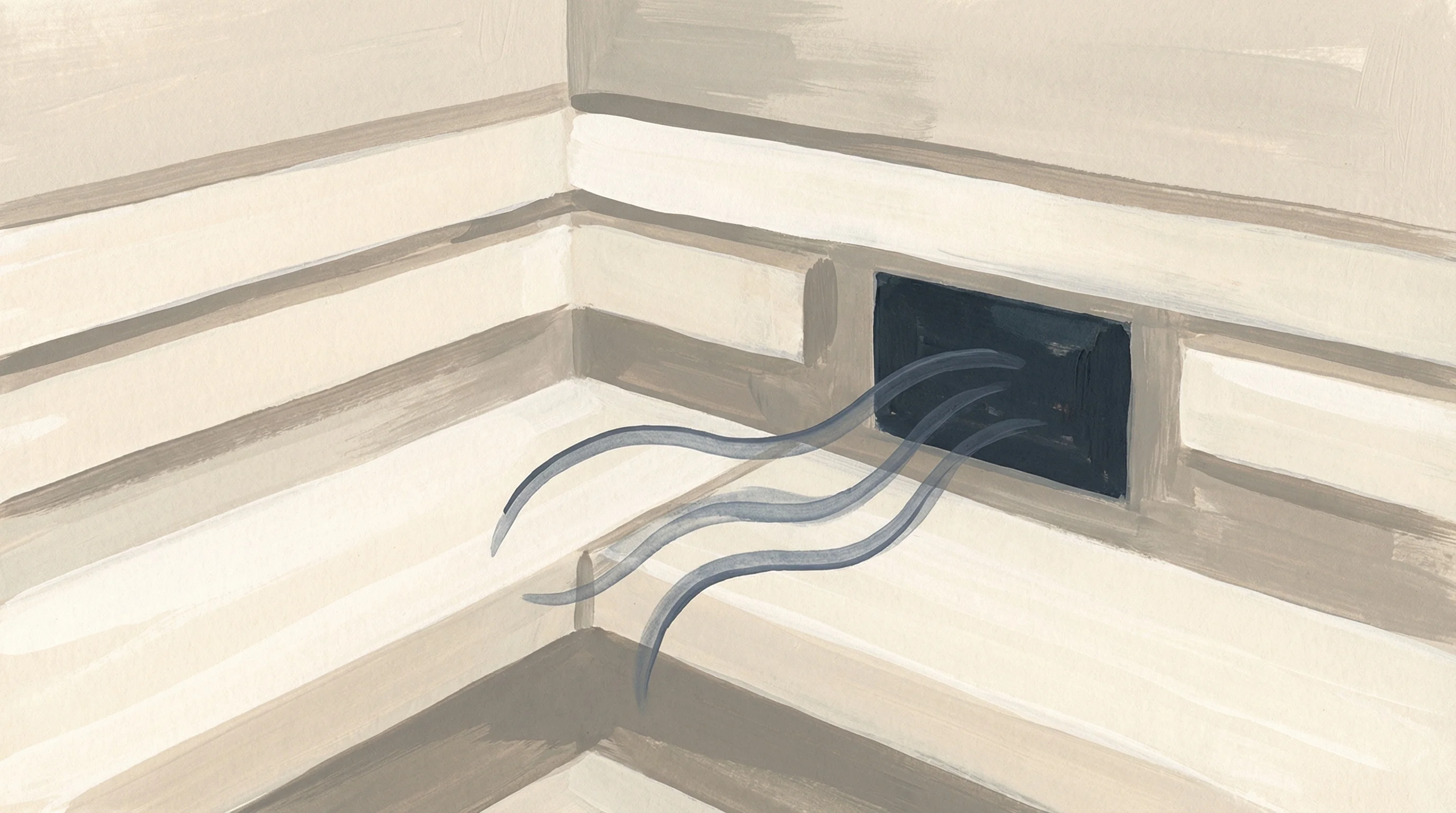
Where the unit lives in your home affects how well it performs. Infrared saunas emit heat outward as well as inward, and in a small, poorly ventilated room, that ambient heat accumulates. The room gets warmer, the unit works harder to maintain its target temperature, and the space around you becomes less comfortable to step back into after a session.

Ventilation doesn't need to be elaborate. A room with a door that can stay open during or after use, or a window that allows airflow, handles the job in most cases. Heavenly Heat Saunas notes that units placed in warmer rooms at around 22 to 25°C heat up 30% faster than those in cooler, unventilated spaces, which means the placement question also affects how long you wait before stepping in. A sheltered, reasonably warm location with adequate airflow is the right target.

Follow your manufacturer's instructions for electrical setup. Infrared units draw meaningful power, and the installation guidance exists to prevent hazards, not to be skimmed.

Sauna habit infrastructure

Consistency is the variable with the most leverage in a home sauna practice, and consistency in a home environment doesn't happen by motivation alone. It happens by design.

Sauna habit infrastructure refers to the environmental and scheduling conditions that make regular sessions automatic rather than effortful. A practice that requires active decision-making each time it occurs gets negotiated away whenever the day gets complicated. One that's attached to an existing routine simply happens.

The practical version of this looks like assigning your sessions to a fixed window: before work, after a workout has cooled down, or earlier in the evening before the two-hour buffer before sleep that supports rest rather than disrupting it. The specific time matters less than its consistency and its connection to something that already happens in your day. When the sauna is on the same schedule as your morning coffee or your post-workout shower, the friction of deciding whether to go disappears.

Pre-heating fits into this same structure. Starting the unit before you get dressed, eat, or begin your pre-session routine means the cabin is ready when you are, rather than your routine stalling while you wait for temperature.

Maintenance

Pre-heating fits into this same structure. Starting the unit before you get dressed, eat, or begin your pre-session routine means the cabin is ready when you are, rather than your routine stalling while you wait for temperature.

Wiping down bench surfaces and interior walls after each session with a clean towel or a mild, non-toxic cleaner takes less than two minutes and keeps the cabin hygienic. Sitting on a fresh towel during sessions, as established earlier in this guide, reduces how much sweat contacts the wood directly and makes post-session cleanup easier.

Beyond the daily wipe-down, follow your manufacturer's maintenance schedule. Periodic inspection of heating panels, wood condition, and electrical connections catches issues before they become problems. Some manufacturers recommend occasional deeper cleaning of the wood and panel surfaces; the manual for your specific unit is the right reference for cadence and method.

These details feel minor individually. Collectively, they're what separates a unit that runs reliably for years from one that degrades, develops odors, or creates safety concerns.

The goal of all of it, placement, habit structure, and maintenance, is to make your home practice frictionless enough that it actually happens at the frequency the session progression framework calls for. Consistency built into the environment doesn't require willpower. It just requires setup.

Making Your Decision

Every layer of this guide has been building toward a single outcome: a practice you'll actually maintain. The question at this point is how to assemble those layers around your specific situation rather than someone else's ideal scenario.

Your starting point shapes everything that follows. If heat exposure is genuinely new to you, lean conservative on both duration and frequency while your body adapts. Healthline recommends that healthy adults new to infrared sauna use keep initial sessions to 15 to 30 minutes, and for those who run warm or tend toward adverse reactions, starting even shorter gives you useful information about how your body responds before you commit to longer exposure. From there, the session progression framework guides you forward: increase duration and frequency gradually, and let your comfort level, not a fixed schedule, set the pace.

infrared sauna safety what you need to know before you sweat image 12

Your primary goal also determines how you configure each session. If recovery is the priority, post-workout timing is where the evidence points. A 2023 study published in PMC found that infrared sauna use after resistance training lowered muscle soreness 14 hours later compared to passive rest, and the same study found no negative impact on heart rate variability. That recovery window, after the workout has cooled down and you've waited roughly 20 to 30 minutes, tends to be where the session earns its keep most reliably. If your goal is general wellness and stress management, the specific timing matters less than picking a slot you can protect across the week. Consistency, as established throughout this guide, carries more weight than any individual session configuration.

If you're integrating other modalities such as cold plunges or cryotherapy, sequencing deserves deliberate thought. Both heat and cold place demands on the cardiovascular and recovery systems, and combining them in the same block requires adequate time between them. There's no universal prescription here; personal tolerance and how your body responds session to session is the more reliable guide than any fixed rule.

On sweat response: give the adaptation process room to develop. Studies on heat acclimation indicate it can take anywhere from 10 to 20 sessions before sweat glands settle into a consistent pattern. Early sessions that feel underwhelming on the sweat front are part of that process, not evidence that something is off. Entering each session well-hydrated matters throughout this period. Healthline puts the pre-session baseline at 16 to 20 ounces of water, and that number holds regardless of whether you're in your first week or your sixth month.

For device and accessory choices, the decisions are straightforward. Most consumer electronics, including nearly all wearables, are rated for operating temperatures up to around 35°C (95°F), which a standard infrared session exceeds even at conservative settings. Leave them outside. Jewelry goes too, where the skin contact risk in a heat environment is real and easy to avoid. Use safe aromatherapy methods if that layer adds value for you, and choose clothing that allows maximum skin exposure to the radiant energy.

The post-session regulation window applies regardless of your goal, timing, or experience level. Treat the cooldown period as part of the session itself, not an optional add-on. Continue hydrating, let your body temperature normalize before jumping back into activity, and if you're using the sauna in the evening, the two-hour buffer before sleep is worth protecting.

For home users, the practice only delivers at the frequency the session progression framework calls for if the sauna habit infrastructure is genuinely frictionless. That means placement, ventilation, and maintenance handled in advance, not negotiated each time. Studio users face a different version of the same challenge: scheduling discipline and a reliable packing routine that removes friction from the decision to go.

There's no single right configuration. There's only the one that fits your life closely enough that you actually show up for it. The details this guide has covered give you the tools to build that configuration deliberately rather than by trial and error.

The configuration you've built across this guide isn't complicated in any single part. It's the combination that creates reliable results: a prepared body, a correctly set unit, appropriate clothing for maximum radiant absorption, productive time inside, and a post-session regulation window that you treat as part of the session rather than an afterthought. Each decision compounds the others. Skipping hydration undermines sweat response. Rushing the cooldown cuts short the parasympathetic response the session just spent 30 minutes building. Getting the temperature right means nothing if you've entered depleted.

That compounding logic is the central insight. The heat itself is consistent. What varies is everything surrounding it.

You now have the framework to make those surrounding decisions well, and the underlying reasons why each one matters. You understand why thermogenic latency means the first ten minutes aren't wasted, why sweat adaptation across early sessions is a process to support rather than a problem to fix, and why consistency across the week outweighs any individual session's configuration. You understand the sequencing logic for workouts, the two-hour buffer for evening sessions, and why the sauna habit infrastructure in a home context needs to be designed, not relied upon to happen organically.

None of that requires perfection to begin.

The practical starting point is simpler than the full guide might suggest: prepare your body, set a conservative temperature in the lower part of the effective range, keep your first sessions on the shorter end of what Healthline recommends for new users, and pay attention to what your body tells you. From there, the session progression framework does the work. Duration and frequency build gradually. Sweat response settles over weeks of consistent use. Your ability to read your own signals improves with repetition in ways that no written guide can fully replicate.

The most important session, practically speaking, is the one that becomes the second session. That's where the adaptation process begins in earnest, where the body starts treating heat exposure as something familiar rather than novel. The first session is useful data. The tenth session is where the practice takes hold.

One calibration worth carrying forward: research on infrared sauna benefits, as the Mayo Clinic notes, is ongoing, and not every claimed outcome has the same level of evidence behind it. The well-supported returns, things like reduced muscle soreness post-workout, cardiovascular demand comparable to moderate exercise, and improved relaxation, are reliable enough to build a practice around. Other benefits people associate with infrared use deserve proportionate confidence rather than certainty. That's not a reason for skepticism; it's a reason to enter the practice with accurate expectations rather than inflated ones. Accurate expectations are also what make consistency easier, because you're not waiting for dramatic effects that may take time to materialize.

Either way, the practice is the same: prepare, enter, give your body the time it needs, recover deliberately, and repeat.

That's the whole thing. Everything this guide has covered leads back to that sequence, and the sequence is worth protecting.