Infrared Sauna Safety: What You Need to Know Before You Sweat

- Is Infrared Sauna Safe? Understanding the General Risk Picture
- Infrared Sauna with Medical Conditions and Implants: A Condition-by-Condition Guide
- Infrared Sauna, Pregnancy, Breastfeeding, and Fertility
- Medication and Device Interactions with Infrared Sauna
- Potential Side Effects and Adverse Reactions to Infrared Sauna
- Eye Safety in Infrared Saunas: Damage, Cataracts, and Protective Gear
- Infrared Sauna Use for Vulnerable Groups: Children and Older Adults
- EMF, Radiation, and Cancer Risk from Infrared Saunas
- Skin Burns and Sunburn Risk from Infrared Sauna Use
- Fire Hazards and Physical Safety Risks from Infrared Sauna Equipment
You bought the session, cleared an hour, and then paused at the door wondering whether you should actually be in there. That pause is worth listening to.
Infrared saunas heat your body directly using light wavelengths rather than warming the surrounding air, which gives them a different physiological profile than traditional steam saunas. That distinction matters for safety, but it doesn't make every question disappear. The Mayo Clinic confirms that infrared saunas are generally safe for most healthy people when used properly. The operative phrase is "most healthy people." For everyone else, the answer is more complicated, and the gap between "probably fine" and "genuinely risky" depends on factors that are very specific to you.
Some of those factors are obvious. Pregnancy changes the calculus entirely, and the American College of Obstetricians and Gynecologists advises against hot environments during it. Certain heart conditions, implanted devices, and medications create risks that the average spa waiver doesn't cover in any useful depth. Other factors are less obvious: bleeding disorders, kidney disease, low blood pressure, and even the glass of wine you had before your session all belong on the list.
Then there are the questions that tend to circulate online, where confident claims often outrun the actual evidence. Do infrared saunas cause cancer? What about EMF exposure? Can children use them? What happens to your eyes? These questions deserve straight answers, and some of those answers are more reassuring than the internet might suggest, while others call for more caution than most enthusiasts acknowledge.
This guide works through the full picture. You'll come away knowing the general risk profile for healthy users and the specific conditions that require a doctor's sign-off before you step inside. You'll understand what pregnancy, breastfeeding, and fertility research actually shows, rather than the polarized takes that dominate wellness forums. You'll see which drug and device interactions are genuinely worth a conversation with your physician. You'll learn the difference between side effects that resolve on their own and the warning signs that mean you should stop immediately.
The guide also covers the risks that people rarely think to ask about: what the science says on EMF and cancer claims, how infrared light affects your eyes and what protective gear actually does, skin burn risk including the sunburn question, and the physical hazards from the equipment itself.
If you're healthy and simply want to know whether your weekly session is a reasonable habit, you'll find that answer here. If you have a specific medical condition, an implant, or a medication that makes you uncertain, you'll leave with a clearer sense of what to discuss with your doctor and why it matters. The goal isn't to scare you out of the sauna or to wave away legitimate concerns. It's to give you an honest, accurate picture so you can make a decision that actually fits your situation.
Is Infrared Sauna Safe? Understanding the General Risk Picture
Session parameters matter more than most people realize
Think of general sauna safety the way you think about swimming. The pool itself isn't dangerous. Supervised lap swimming carries very low risk. But the specific conditions around you, your health, your preparation, how long you stay in, still determine whether you get out feeling better or worse. Infrared saunas work the same way.
A 2018 systematic review cited by Healthline found that severe events, including deaths, related to far infrared sauna use are rare. That's a meaningful data point, not a guarantee. Far infrared devices, which use longer light wavelengths to generate heat within the body's tissues, are the most common types in commercial and home settings and carry the bulk of the safety literature behind them. Near infrared devices operate at shorter wavelengths and may raise additional questions, particularly around eye exposure, though the research base for near infrared in sauna contexts is thinner overall.
The Mayo Clinic is direct about what the evidence actually supports: infrared sauna benefits are real for some outcomes, but broad health claims often outpace the clinical data. That gap between what's been studied and what's been marketed is worth keeping in mind as you evaluate what you read online.
Session parameters matter more than most people realize
Infrared sauna session parameters are the three variables that most directly shape your risk on any given day: how long you stay in, what temperature you're using, and how well hydrated you are going in. These aren't afterthoughts. They're the levers that move the experience from low-risk to avoidable problem.
Healthline's guidance, drawn from multiple clinical and safety sources, puts the session window for healthy adults between 15 and 30 minutes, with an upper ceiling of around 40 minutes. Starting shorter and building gradually is the consistent recommendation across sources. Those who are newer to heat exposure may want to begin at the lower end of that range and let the body adjust over several sessions before extending time.
On temperature, most guidance points to a working range that starts around 130°F and stays at or below 150°F. Starting at the lower end gives the body time to acclimate, particularly for first-time users.
Hydration is the variable people most often underestimate. Healthline recommends drinking water before, during, and after a session, and avoiding alcohol entirely. That second point matters because alcohol compounds the cardiovascular load of heat exposure in ways that make dehydration and dizziness substantially more likely.
Portable saunas and sauna blankets introduce a different variable
Portable infrared saunas and sauna blankets have become popular partly because they're accessible and affordable. The infrared mechanism in these products isn't categorically less safe than a cabinet unit. The session parameters that apply to fixed units apply here too. What changes is the product quality variable.
A well-built portable unit with consistent heat distribution and appropriate materials can deliver a comparable experience to a cabinet sauna. A poorly constructed one may not. For these formats, the most practical safety question is product quality: look for independent certifications, consistent temperature control, and materials that don't introduce additional concerns at heat. The physiological risks, dehydration, overheating, and duration, remain the same regardless of the format.
What "low risk" actually means
Severe adverse events from far infrared sauna use are rare, which is genuinely reassuring. But "low risk for most healthy adults" leaves a meaningful group outside that description. The Mayo Clinic and Healthline both emphasize that anyone with an existing medical condition, anyone on medications, and anyone uncertain about their physiological profile should consult a doctor before starting regular sessions. That recommendation isn't defensive boilerplate. Individual factors, your health history, your current medications, your baseline cardiovascular function, shape whether a session that's routine for one person is risky for another.
Once you understand where you fall in that picture, the more specific questions become easier to work through, particularly how conditions like heart disease, implanted devices, or recent surgery might shift the risk calculation for you personally.
Infrared Sauna with Medical Conditions and Implants: A Condition-by-Condition Guide
The conditions and implants that complicate sauna use don't all belong in the same category, and treating them as one group leads to either unnecessary anxiety or genuinely bad decisions. The physician clearance threshold, the point at which you need documented medical sign-off before using an infrared sauna rather than simply proceeding with caution, varies considerably depending on what's actually happening in your body.
Pacemakers and electronic implants
A pacemaker is an implanted electronic device that regulates heart rhythm through electrical signals. That electronic function is what makes sauna use genuinely complex. One source suggests that certain sauna assembly magnets may interfere with pacemaker function, though this concern is not uniform across devices or manufacturers. On the other hand, major pacemaker manufacturers including Medtronic have classified infrared saunas as having "no effect" on their devices, according to guidance cited by Good Health Saunas and Saunas.org. That's a meaningful data point, but it applies to specific devices under specific conditions, not to every pacemaker in every sauna.
Passive metal implants: joint replacements, rods, and pins
A titanium hip or knee replacement is not an electronic device. It doesn't have a function that heat or electromagnetic fields can disrupt the way they might an active implant. Hip replacements frequently involve titanium components, and the concern with these is thermal conduction, not electrical interference.
The governing variable for passive metal implants is almost always the post-surgical healing timeline, not the implant itself. Using an infrared sauna immediately after surgery is not appropriate, and Healthline's guidance puts the minimum wait at 48 hours for minor injuries, with the consistent recommendation across surgical sources that doctor approval should precede any session after a major procedure. That approval matters more than any estimated waiting period, because the inflammatory stage of your healing determines the actual risk, and that's something your surgeon can assess and you cannot assess from general guidelines alone. Saunas.org and Inner Light Sauna both recommend consulting your surgeon before returning to sauna use after hip replacement or any procedure involving implanted hardware.
Breast implants
Breast implants introduce a third category: the concern here centers on silicone's thermal tolerance and how sustained heat exposure might affect the implant over time. The honest answer is that the evidence base here is thin, and much of what circulates online extrapolates from limited data. What's consistent across plastic surgery and sauna sources, including guidance from Partington Plastic Surgery and RealSelf physicians, is that you should consult your surgeon before sauna use, keep sessions short, and stop immediately if you notice any changes.
Diabetes and kidney disease
For both conditions, the governing risk is circulatory and fluid regulation under heat load. Healthline specifically identifies diabetes with neuropathy as a contraindication for infrared sauna use, because neuropathy impairs the body's ability to sense heat accurately, raising burn and overheating risk. More broadly, consulting a doctor before sauna use is particularly important for people with diabetes who use insulin or have associated heart involvement.
For kidney disease, the threshold is severity. Infrared sauna use with advanced chronic kidney disease, stages 4 and 5, should not proceed without physician approval, and PubMed-cited research recommends nephrologist consultation specifically. Healthline also lists kidney disease as a condition requiring medical clearance before far infrared sauna use.
If you experience dizziness, wound changes, unusual fatigue, or any unexpected symptoms during a session, stop and consult your doctor before returning.

Infrared Sauna, Pregnancy, Breastfeeding, and Fertility

Pregnancy, breastfeeding, and fertility require specific safety considerations. The risks here aren't primarily about managing a chronic condition or protecting an implant. They center on core body temperature and what happens when that temperature climbs past the threshold that matters for fetal development, sperm production, and milk supply.
Pregnancy
The core body temperature threshold is the point at which sustained internal heat creates physiological risk to developing tissue. For pregnancy, that threshold is the reason obstetricians treat elevated core temperature as a hard limit rather than a comfort concern. The pregnant body already runs warmer than baseline, and a session that feels manageable for a healthy adult can push core temperature past what's considered safe for fetal development, particularly in the first trimester when organ formation is underway. Healthline is direct on this: pregnant individuals should avoid infrared saunas entirely, with specific concern about the risk to the fetus from elevated body temperature. That guidance is consistent across clinical and sauna-specific sources, including Inner Light Sauna and Rocky Mountain Saunas. Avoiding infrared sauna use during pregnancy is one of the clearest contraindications, meaning a situation where the risk profile is sufficiently established that use is not recommended regardless of how short the session or how well-hydrated you are.
Breastfeeding
Breastfeeding introduces a meaningfully different picture. The concern here isn't direct thermal risk to the infant. It's dehydration and its downstream effect on milk supply. Sweating heavily in a sauna session draws from the same fluid reserves that support milk production. Good Health Saunas recommends that breastfeeding mothers hydrate extensively before, during, and after any session, and monitor for changes in milk supply afterward. Watching for infant cues like fewer wet diapers gives you a practical signal that fluid balance may be off. Breastfeeding mothers with any heart involvement should consult a doctor before using an infrared sauna, given the additional cardiovascular load heat places on the body. For most healthy postpartum women without complicating conditions, the general guidance is to prioritize professional medical advice before returning to regular sessions.
Male fertility
For men, the concern is scrotal temperature. Sperm production requires a temperature slightly below core body temperature, which is why the testes are located outside the body cavity. Sustained heat exposure raises scrotal temperature toward core levels, and Healthline cites a 2013 study finding that prolonged infrared sauna use can cause a temporary reduction in sperm count, with effects on count and motility noted as reversible. The emphasis on "temporary" matters, but so does the word "prolonged." Men who are actively trying to conceive should approach regular sauna use with caution, and some guidance suggests avoiding it during the roughly 90-day preconception window when sperm are maturing. Men with existing fertility concerns in particular should consult a doctor before making sauna use a regular habit.
Female fertility
The fertility question for women is less settled. Some evidence suggests that stress reduction and improved circulation associated with regular sauna use may have indirect benefits, but the research base here is thin and the claims should be treated cautiously rather than as established outcomes. Consulting a healthcare professional before using infrared saunas regularly when trying to conceive is the consistent practical advice across sources.
Sauna use during menstruation
The question of whether sauna use is safe during a period gets a more restrictive answer than the evidence generally supports. Infrared sauna use during menstruation isn't categorically off-limits, but it does require more attention to a few variables. Dehydration risk is amplified during menstruation, so hydration needs to be aggressive. Heat may intensify cramping for some people, which is a useful signal to act on. Guidance from Inner Light Sauna recommends keeping temperatures at the lower end of the working range (around 55°C or below), skipping sessions on heavy flow days, and stopping immediately if symptoms worsen or dizziness sets in. Tracking how your body responds across a few cycles is the most practical way to calibrate whether and when sessions work well for you personally.
Medication and Device Interactions with Infrared Sauna

Personal response patterns, medication timing, and the devices you wear into a session all matter in ways that don't appear on most sauna safety checklists. The medication interaction picture is narrower than many users fear, but the interactions that do exist are clinically significant enough to deserve specific attention.
How heat changes what medications do
Some medications are designed around predictable physiology at normal body temperature. A meaningful rise in core heat disrupts that baseline in ways the original dosing didn't account for. The effects vary considerably by drug class, which is why a general "ask your doctor" placeholder isn't adequate here.
How heat changes what medications do
Blood pressure medications and diuretics are the most commonly flagged category. Heat already causes blood vessels to dilate and blood pressure to drop. Antihypertensives amplify that drop, and Healthline identifies excessive blood pressure drops, dizziness, and lightheadedness as real risks when these medications combine with sauna heat. Healthline specifically recommends against taking antihypertensive medications immediately before a session. Diuretics compound the dehydration load that sweating already creates, raising the risk of electrolyte imbalance. Mayo Clinic advisesgetting medical clearance before using an infrared sauna with high blood pressure, and Healthline extends that requirement to cardiovascular medications including beta-blockers.
How heat changes what medications do
Barbiturates and antihistamines also appear on established contraindication lists. Both can affect how the body regulates temperature, making it harder to respond appropriately when core heat rises. Healthline lists blood thinners like Warfarin, barbiturates, and antihistamines alongside diuretics and beta-blockers as medications that put users at higher risk in a sauna environment. For anyone on medications that influence cardiovascular response or heat tolerance, a conversation with your prescriber before regular sessions is the appropriate step.
More broadly, guidance available across multiple sauna and clinical sources suggests that anyone on heat-sensitive medications should confirm safety with a prescriber before using an infrared sauna, rather than relying on general contraindication lists that may not reflect your specific drug or dose.
Wearable devices and their operating temperature range
Barbiturates and antihistamines also appear on established contraindication lists. Both can affect how the body regulates temperature, making it harder to respond appropriately when core heat rises. Healthline lists blood thinners like Warfarin, barbiturates, and antihistamines alongside diuretics and beta-blockers as medications that put users at higher risk in a sauna environment. For anyone on medications that influence cardiovascular response or heat tolerance, a conversation with your prescriber before regular sessions is the appropriate step.
For continuous glucose monitors, operating outside the rated temperature range can produce inaccurate readings. That matters considerably for anyone managing insulin-dependent diabetes, where a false reading can drive the wrong treatment decision. Insulin pumps carry an additional concern: heat can affect insulin stability and, depending on the pump model, potentially alter device function. Removing the device before a session is often the practical solution, though for monitors that can't simply be paused, timing your session around a sensor replacement window or confirming manufacturer guidance for your specific model is worth the extra step.
Before your first session with any wearable device, check the manufacturer's temperature specifications and confirm whether the device should be removed, left on, or handled in a specific way. When in doubt, your prescriber or the device manufacturer's support line will give you a direct answer specific to your equipment.
Potential Side Effects and Adverse Reactions to Infrared Sauna
Side effects from an infrared sauna session fall into three meaningfully different categories, and knowing which one you're in determines whether the right response is to drink more water, adjust your schedule, or stop entirely and call your doctor.

The expected adjustment responses
Most healthy users only experience mild responses. Healthline confirms that common side effects are typically mild and short-term with responsible use. Skin flushing from heat-driven blood flow, mild lightheadedness when standing up quickly after a session, and post-session fatigue are all normal physiological responses to sustained heat exposure. Excessive sweating is the central mechanism behind most of these, as Healthline notes. The fix is usually straightforward: hydrate before and after, sit for a minute before standing, and give your body time to regulate. Older adults are more susceptible to side effects in this category, and alcohol significantly increases the likelihood of adverse responses, so both factors are worth accounting for before any session.
The detox-associated reactions
The second category is where most of the anxious internet searching happens, and where the picture is more complicated.
A Herxheimer reaction, in the infrared sauna context, refers to a flu-like response that some users experience after a session, thought to occur when the body processes a large release of stored substances through sweat. Symptoms can include headaches, fatigue, muscle aches, nausea, chills, brain fog, and skin rashes. According to High Tech Health and Good Health Saunas, these symptoms typically appear hours after a session and can last one to three days. The reaction is particularly noted in individuals with high toxic loads. The critical distinction from simple overheating is the timeline: a Herxheimer response tends to emerge after the session ends rather than during it. If what you're experiencing sounds more like a delayed flu than an in-session emergency, that context matters for how you respond.
Loose stool and gastrointestinal disruption sit in similar territory. Infrared saunas don't directly cause diarrhea, according to sources including Inner Light Sauna and research available through PubMed. The indirect pathway runs through fluid and electrolyte loss from heavy sweating, which can disrupt digestion and occasionally result in loose stools. For people with pre-existing gut sensitivity, including those with IBS, this risk is meaningfully higher. Staying well-hydrated and including electrolytes, not just water, helps close the gap here.
The stop-and-investigate signals
The third category requires a different response entirely.
Dizziness, nausea, chest tightness, and a rapid heartbeat during a session are signals to exit immediately. Healthline is direct: leave the sauna at once if any of these occur, and seek medical attention if symptoms persist after you've left and cooled down. These aren't adjustment responses; they indicate that something is outside the body's comfortable working range.
Skin rash fits into both the second and third categories depending on what's driving it. A heat-induced skin response, meaning a reaction triggered by the combination of dry heat, heavy sweating, and residue left on the skin, is generally mild and resolves with post-session cleansing and proper hydration. Sweat left on the skin after a session is a common source of irritation that most users don't think to address. Healthline notes that rashes from sauna use are typically mild. However, a rash that is persistent, spreading, or accompanied by other symptoms belongs in the third category. It may indicate a photosensitivity reaction, contact sensitivity to sauna materials, or an underlying skin condition being aggravated by heat. Anyone with eczema or high heat sensitivity should consult a doctor before regular sessions, per Healthline.
The practical framework is simple. Mild flushing and tiredness after a session call for water and rest. A delayed flu-like response hours later, or occasional loose stools, are worth tracking across sessions and discussing with a doctor if they recur. Dizziness, chest tightness, rapid heartbeat, or a persistent rash are reasons to stop and get evaluated, not reasons to push through.
Eye Safety in Infrared Saunas: Damage, Cataracts, and Protective Gear

Eyes can absorb infrared radiation without warning. Skin tells you when it's too hot. The lens of the eye does not. That silent absorption is precisely why ophthalmologists flag long-term cumulative exposure as a concern worth understanding, and why questions about eye safety in infrared saunas deserve more specific answers than most sauna guides provide.
Why sauna type changes the risk calculation
Infrared wavelength penetration depth determines how far into biological tissue a given wavelength travels before its energy is absorbed. For ocular tissue, this distinction matters considerably. Far-infrared wavelengths are longer and are absorbed largely at the surface of whatever they strike, including the outer layers of the eye, without penetrating deeply into the lens. According to High Tech Health, far-infrared light at wavelengths over 3000nm has no proven eye damage, and sources including realrelaxmall.com note that it poses a significantly lower cataract risk than near-infrared.
Near-infrared wavelengths, in the 780 to 1400nm range, behave differently. They penetrate deeper into tissue, which means they reach the lens itself. The concern about infrared saunas causing cataracts is tied specifically to this wavelength range and how the lens absorbs its energy over repeated exposures. High Tech Health identifies near-infrared as the main concern for eye damage in this context, and both realrelaxmall.com and theexaminernews.com connect this wavelength range to increased cataract risk.
The cataract data behind this concern comes primarily from occupational studies, particularly workers in iron, steel, and glass industries exposed to intense near-infrared radiation over years.
A 1984 study cited by High Tech Health found that ironworkers had 2.5 times the cataract risk of controls.
The International Commission on Non-Ionizing Radiation Protection acknowledges an epidemiological association between cataracts and chronic intermittent exposure to infrared radiation at low irradiance. Sauna exposure is far lower in intensity than industrial settings, and sources including realrelaxmall.com are clear that the risk from typical sauna use is significantly lower than from occupational exposure. The concern is still real for frequent users with near-infrared emitters, but it sits in proportion.
Contacts, glasses, and what they actually do to your risk
Soft contact lenses can trap heat against the eye and dry out rapidly in a low-humidity environment, which creates comfort problems and potential irritation even if the radiation exposure itself is modest. Standard glasses frames conduct heat to the surrounding skin, which is a discomfort issue rather than a safety one, but neither contacts nor regular glasses provide any meaningful protection against infrared wavelengths. If you're in a near-infrared sauna and looking for actual protection, regular eyewear doesn't provide it.
How to think about eye protection
There's genuine disagreement in the available guidance about how necessary eye protection is, which PubMed-indexed sources acknowledge directly. The answer depends on two variables: the type of sauna and how often you use it.
For far-infrared users, the risk profile is low. Keeping eyes closed and avoiding direct staring at heaters addresses the practical exposure, and sources including clearlightred.com and Inner Light Sauna both recommend this as a baseline approach. For short sessions in far-infrared units, goggles are not strictly required, according to Inner Light Sauna.
For near-infrared sauna users, the picture shifts. High Tech Health notes that ICNIRP guidelines raise concerns about uncontrollable near-infrared dosage in a three-dimensional sauna space. Regular or frequent near-infrared sauna users, and anyone with pre-existing eye conditions such as dry eye, light sensitivity, or existing cataracts, have more reason to consider dedicated protection. If you go this route, the relevant spec is whether the eyewear actually blocks near-infrared wavelengths. Not all tinted goggles marketed for sauna use do. NIR-blocking glasses rated for that specific wavelength range, sometimes labeled NIBSL, address the actual exposure rather than just reducing visible light. For anyone with existing eye conditions, guidance from newpathpsychiatric.com and Heavenly Heat Saunas recommends consulting an eye doctor before regular sessions rather than self-selecting a protection level.
The practical baseline: keep eyes closed in any infrared sauna, avoid staring at emitters, and if you use a near-infrared unit frequently or have sensitive eyes, invest in eyewear rated to block the relevant wavelength range rather than assuming standard goggles cover the gap.
Infrared Sauna Use for Vulnerable Groups: Children and Older Adults
Thermoregulatory capacity, the body's ability to detect heat, trigger sweating, and redirect blood flow to shed excess warmth, is not fixed across a human lifespan. It matures slowly in childhood and declines gradually with age. That single variable explains most of the adjusted guidance for both children and elderly users, and the reasoning behind those adjustments differs enough that collapsing them into one "use caution" instruction leaves caregivers without the information they actually need.
Children and infrared heat
A seven-year-old and an adult may feel equally comfortable at the same session temperature, but their bodies are doing very different work to maintain that comfort. Children have a lower sweating capacity than adults, which limits how efficiently they shed heat through evaporation. They also have a higher surface-area-to-body-mass ratio, meaning they absorb radiant heat more rapidly relative to their size. Layered on top of that is the self-reporting problem: young children don't consistently recognize or communicate early heat stress symptoms before those symptoms become serious.
Healthline identifies children as a vulnerable group with meaningfully higher risk of dehydration and adverse reactions during infrared sauna use. The guidance from Medical News Today and Good Health Saunas draws a clear line at age six: children six and under should avoid infrared saunas unless a doctor has specifically approved it. For children over six, supervised sessions capped at around 15 minutes represent the outer boundary, not a target. Healthline recommends that children avoid portable infrared saunas or get explicit medical clearance before using them, and both Healthline and other sources extend that caution specifically to near-infrared units.
Older adults and the compounding risk picture
The risk profile for older adults differs in character from children's. Thermoregulatory capacity declines with age: sweating response becomes slower, and the sensation of thirst often lags behind actual fluid loss. Healthline is direct about both the risk and the parameters, identifying elderly individuals as facing higher risks of dehydration and dizziness, with a recommended session ceiling of 5 to 10 minutes, well below what applies to healthy younger adults. Healthline's position is equally direct on clearance: older adults should get doctor approval before using an infrared sauna.
The compounding factor here is what we've already established about medications and medical conditions. Older adults are disproportionately likely to be managing cardiovascular conditions and on multiple medications simultaneously. Where those medications include diuretics or antihypertensives, the fluid and blood pressure risks we covered earlier apply with particular force, because the physiological margin that thermoregulatory decline already narrows gets narrowed further. For individuals over 85, the convergence of age-related changes and likely comorbidities means provider input is consistently recommended before any session, regardless of how mild the heat feels in the moment.
Where the two groups meet
Both groups benefit from shorter sessions, lower temperatures within the working range, consistent hydration, and direct supervision or an available support person nearby. The underlying logic is the same in both cases: reduced thermoregulatory capacity leaves less margin before heat stress moves from manageable to serious.
The distinction worth holding onto is directional. For children, the issue is an immature system that hasn't yet reached full capacity. For older adults, it's a declining system frequently operating against a backdrop of medications and conditions that compound the physiological load. A caregiver making this decision for either group isn't just asking whether the person can tolerate the temperature. They're asking whether the combination of thermoregulatory capacity, current health, and any medications leaves enough margin to handle the heat load safely. That question is specific enough, and the stakes individual enough, that it tends to warrant a conversation with a physician rather than reliance on general guidelines alone.
Skin Burns and Sunburn Risk from Infrared Sauna Use
Safety concerns regarding infrared radiation often stem from terminology confusion. Infrared radiation differs fundamentally from ionizing radiation.
Ionizing radiation, the kind produced by X-rays and nuclear materials, carries enough energy to knock electrons loose from atoms and directly damage DNA. That DNA damage is the mechanism behind radiation-associated cancer risk. Non-ionizing radiation, the category that covers infrared light, radio waves, and visible light, does not carry enough energy to do this. The distinction is physical, not a matter of degree. According to sources including allcancer.com, infrared radiation is distinguished from known carcinogens precisely because it cannot damage DNA the way UV rays or X-rays can. The Mayo Clinic, which explicitly addresses the cancer question in its guidance on infrared saunas, reports no harmful effects associated with their use and has not identified cancer causation as a concern. Infrared saunas also do not emit UV radiation, which is the spectrum associated with sunburn and skin cancer from sun exposure.

The confusion between UV and infrared is common enough that homesteadsupplier.com identifies it as a primary driver of the cancer concern online. They are different portions of the electromagnetic spectrum with different biological effects, and infrared sauna heaters do not produce UV light.
What EMF actually means in a sauna context
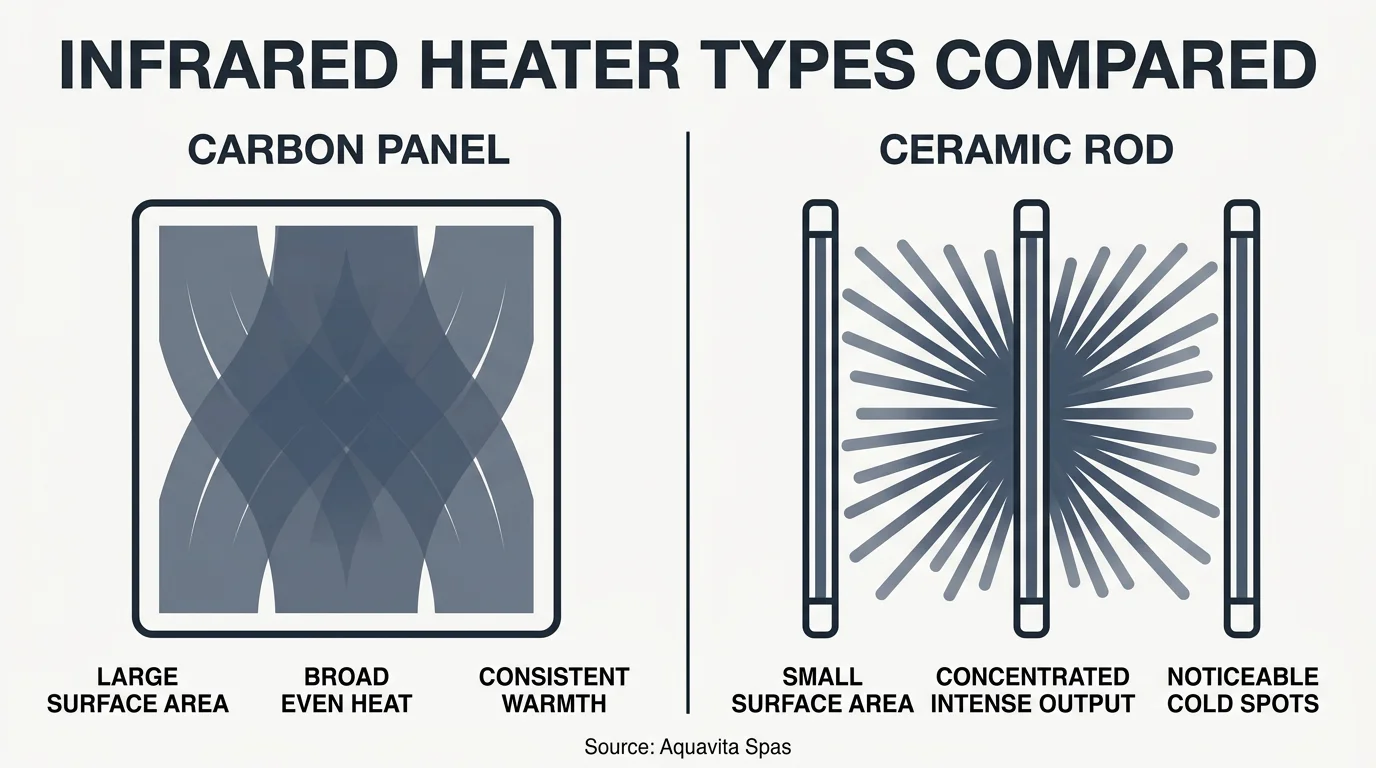
EMF, or electromagnetic field, is a broader category than infrared light. Every electrical device generates electromagnetic fields as a byproduct of carrying current. In an infrared sauna, the heating elements, whether carbon-based or ceramic panels, produce EMF emissions alongside the infrared light they are designed to emit. The EMF in question here is extremely low frequency, generated by the electrical current running through the heater, not by the infrared wavelengths themselves.
The practical catch with low-EMF certification is that it is not standardized across the industry. There is no single universal threshold a product must meet to carry the label, which means two saunas marketed as low-EMF may measure quite differently. Healthline recommends verifying manufacturer test results rather than taking the certification claim at face value. For anyone with specific concerns about prolonged EMF exposure, multiple sources including High Tech Health recommend choosing models with documented third-party testing, or using a specialized meter to confirm readings independently.
For people with self-reported electromagnetic sensitivity, Medical News Today notes that infrared sauna blankets in particular warrant caution, given their proximity to the body during use.
The cancer question, answered directly
The mechanism-level answer is clear: infrared radiation is non-ionizing and does not damage DNA. The Mayo Clinic has not identified infrared saunas as a cancer risk, and sources explicitly citing Mayo Clinic guidance affirm this position. For people already managing a cancer diagnosis, the question shifts from whether saunas cause cancer to whether sauna sessions are compatible with their current treatment. Both Healthline and allcancer.com are direct that cancer patients should consult their oncologist before using infrared saunas, given potential interactions with treatments like chemotherapy and the physiological demands a session places on the body.
EMF emissions from sauna heaters are real and vary by product. What the current evidence does not support is connecting those emissions to cancer risk through any established mechanism. For consumers who want to minimize exposure anyway, verified low-EMF units and independent testing provide a practical path forward without requiring them to resolve a debate the research has not definitively settled.
EMF, Radiation, and Cancer Risk from Infrared Saunas
Consumers who discover a red, tender patch after a session sometimes reach for "sunburn" as the nearest description. As established earlier, infrared saunas produce no UV radiation, so that label doesn't fit the mechanism. What actually happens to skin in these cases falls into two distinct patterns, and knowing which one you're dealing with changes how you respond.

The first is a thermal burn. When skin stays too close to an emitter for too long, surface tissue temperature climbs past what the body can manage through sweating alone. The infrared thermal burn threshold varies by person: skin sensitivity, proximity to the heater panels, session length, and hydration status all shift where that line falls. What's consistent is that users who sit pressed against panels or run well past normal session lengths can cross it, and the result looks like a contact burn. Alphasauna is explicit that distance from the heat source and controlled session duration are the primary behavioral levers here. Both are within the user's direct control.
Consumers who discover a red, tender patch after a session sometimes reach for "sunburn" as the nearest description. As established earlier, infrared saunas produce no UV radiation, so that laThe second pattern is erythema ab igne, a mottled, net-like skin discoloration that develops from repeated heat exposure over time rather than a single intense session. Unlike a thermal burn, it produces no acute pain during the sessions that cause it. The discoloration accumulates gradually, which is why it's easy to miss until it becomes visible. It differs from the temporary redness that follows any session. The risk is highest for users who consistently position themselves very close to panels across many sessions, not for those sitting at a normal working distance.bel doesn't fit the mechanism. What actually happens to skin in these cases falls into two distinct patterns, and knowing which one you're dealing with changes how you respond.
Both patterns are almost entirely preventable through behavior. Distance from emitters, session length, and skin condition going in are the three variables users can actually adjust. Healthline recommends consulting a doctor before using an infrared sauna for anyone with pre-existing skin conditions, specifically because compromised skin reaches the discomfort threshold faster and recovers more slowly. If skin irritation persists or worsens after a session, that falls into the category of stop-and-investigate signals covered earlier, and Healthline is direct that medical advice is warranted rather than waiting it out.
Infrared sauna and existing sunburn
"Is infrared sauna good for sunburn" is a common enough search to address directly. Sunburned skin is already inflamed, its protective barrier is compromised, and its capacity to regulate localized temperature is reduced. Adding more heat to that environment is more likely to worsen discomfort than to help. For severe cases, the Mayo Clinic's guidance is straightforward: see a doctor.
Some sources, including sunstreamsaunas.co.nz, suggest that minor sunburn might tolerate a cautious, low-temperature session with aggressive hydration, stopped immediately if discomfort increases. That framing is limited to mild cases only. Standard sunburn care remains the appropriate first response, with sauna use paused until skin has meaningfully recovered.
The upstream prevention logic applies throughout: managing emitter distance and session length eliminates most burn risk before it starts. Post-session care, specifically gentle cleansing and moisturizing to address what heavy sweating removes from the skin, addresses what remains. For users with sensitive skin, some sources note that barrier products on vulnerable areas before entering can reduce irritation. None of that replaces the positioning decisions made before the session begins.
Fire Hazards and Physical Safety Risks from Infrared Sauna Equipment
The upstream prevention logic applies throughout: managing emitter distance and session length eliminates most burn risk before it starts. Post-session care, specifically gentle cleansing and moisturizing to address what heavy sweating removes from the skin, addresses what remains. For users with sensitive skin, some sources note that barrier products on vulnerable areas before entering can reduce irritation. None of that replaces the positioning decisions made before the session begins.
An infrared sauna is an enclosed heated space running on electrical current. That combination is not inherently dangerous, but it does create failure conditions worth understanding before purchase. Quality-manufactured units with proper installation are not meaningfully more hazardous than other high-draw household appliances. The risk concentrates in specific, avoidable circumstances.
What electrical safety certification actually means
Electrical safety certification refers to third-party testing that verifies a unit meets established safety standards for electrical construction, fire resistance, and thermal performance. The marks you'll see on sauna equipment are UL (Underwriters Laboratories), ETL (Intertek), and CE (the European conformity standard). Each of these requires a product to pass independent laboratory testing before the mark can be applied. A certified unit has been evaluated for wiring integrity, overload protection, and material performance under sustained heat. An uncertified unit has not, which means those properties are unverified by anyone outside the manufacturer.
The practical consequence is straightforward: when comparing units, the presence of a recognized certification mark is one of the few objective indicators a buyer has before the product is in their home. Budget and off-brand portable infrared saunas are more likely to lack these certifications, and the associated risks are not hypothetical. The U.S. Consumer Product Safety Commission's 2025 recall of Lifepro Fitness Bioremedy infrared sauna blankets due to overheating and burn injury risk is a documented example of what that gap looks like in practice.
Ventilation and installation as fire variables
Ventilation requirements for enclosed sauna units refer to the minimum air clearance and airflow conditions a unit needs to operate within its designed thermal range. When a sauna is placed flush against a combustible wall or in a confined space without adequate air circulation around the unit, heat builds in the surrounding environment rather than dissipating as designed. Combined with the electrical load, that creates conditions the unit was not built to handle.
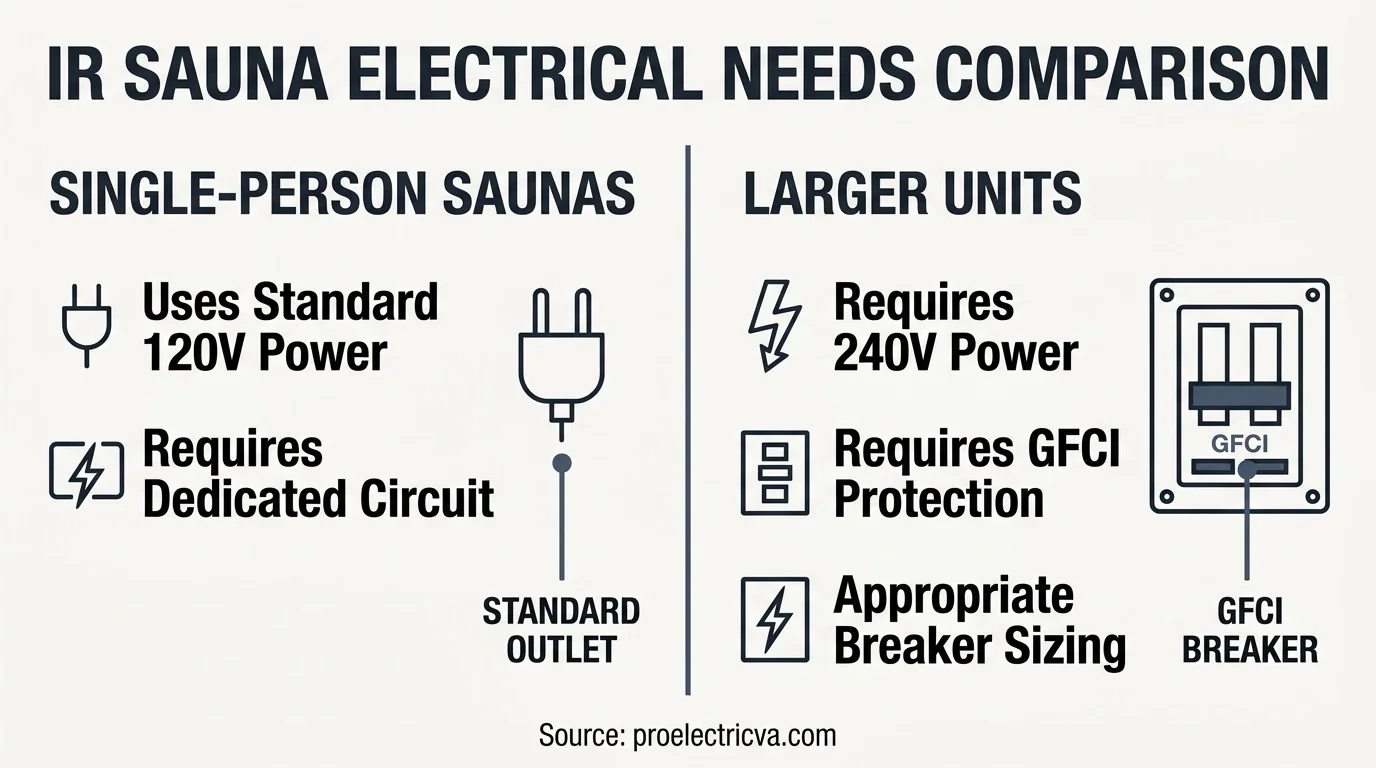
The installation decisions that matter most are: maintaining the clearance distances specified in the manufacturer's documentation, avoiding combustible materials in direct contact with or immediately adjacent to the unit, and ensuring the circuit supplying the sauna is correctly rated for its amperage draw. Overloaded circuits are a primary failure pathway. Most full-size infrared saunas require a dedicated circuit; sharing one with other high-draw appliances is a setup problem, not a session-behavior problem.
Portable units and sauna blankets introduce a related concern: they are frequently used in improvised locations without fixed ventilation planning. Healthline is direct that proper ventilation is required when using infrared sauna tents. Auto-shutoff features and built-in timers help manage overheating risk when ventilation is less controlled. Reputable brands include these as standard features; budget alternatives often do not.
Material quality and off-gassing
Low-cost portable units may use materials that, under sustained heat, could potentially release compounds into the enclosed space, adding an air quality variable alongside the electrical one. This concern is more documented for cheap portable formats than for full-size certified cabins. For sauna blankets specifically, non-toxic material composition is worth verifying before purchase, and options made with non-toxic materials are preferable on this basis.
Material quality and off-gassing
For every other risk covered in this guide, the mitigation involved monitoring your body, adjusting session parameters, or consulting a clinician. Fire and electrical safety work differently. The decisions that determine your risk are the ones you make at purchase and installation, not during the session itself.Checking for a recognized certification mark, confirming the unit's amperage requirements against your available circuit, following manufacturer clearance specifications, and prioritizing brands that include auto-shutoff and ventilation features covers most of the exposure. For full-size cabin units, professional electrical installation is worth the cost. None of this is complicated, but it requires attention before the unit arrives, not after it's already running in your home.

Every section of this guide has handed you one piece of a larger picture. Taken together, they resolve into something more useful than a general verdict: a specific, personal assessment you can actually act on.
The foundation of that assessment is your baseline health status. For most healthy adults, the Mayo Clinic reports no harmful effects from infrared sauna use, and that reassurance is genuine. But "most healthy adults" is a narrower category than it sounds. A cardiovascular condition, an implant that responds to heat or electrical fields, a medication that interacts with vasodilation or photosensitizes your skin, or a diagnosis that impairs your ability to sense overheating all move you out of that default category and into one that requires a more deliberate evaluation.
Your life stage matters in ways that cut across that general health picture. Pregnancy remains a clear contraindication regardless of how healthy you are otherwise. Active fertility treatment, breastfeeding, childhood, and advanced age each follow adjusted guidelines rather than flat prohibitions, but those adjustments are substantive. For older adults, Healthline is direct: physician approval before any session, with a session ceiling well below what applies to younger adults. For children under six, the same approval threshold applies unless a doctor has specifically cleared use. These aren't precautions you can skip based on how mild the heat feels in the moment.
Equipment decisions carry their own layer of risk that session behavior can't compensate for. As established when we covered fire and electrical safety, the purchase decision is where most of that risk is either accepted or eliminated. Electrical safety certification from a recognized body is a non-negotiable filter, not a nice-to-have. For portable units and sauna blankets in particular, the documented gap between certified and uncertified products is wide enough that budget alternatives without verified certifications carry meaningful uncertainty that no amount of careful session management resolves.
Once you're in a session, the controllable variables are session duration, temperature, hydration, and distance from emitters. These parameters determine whether a given session stays in the low-risk range. They also govern the skin-specific risks covered earlier: erythema ab igne and thermal burns are almost entirely behavioral outcomes. Eye protection follows the same logic. If you're using a near-infrared unit frequently, or if you have pre-existing eye conditions, specialized NIR-blocking glasses address the actual exposure pathway; standard eyewear does not.
The EMF and radiation questions have their own resolution. If those concerns are what brought you to this guide, the mechanism-level explanation in the earlier section on EMF and radiation should reframe the question. The practical path forward, for anyone who wants to minimize exposure beyond what standard models deliver, is choosing a unit with documented third-party low-EMF testing rather than relying on a manufacturer claim alone.
Physician clearance is a safety requirement, not a formality. Some conditions and implants require documented sign-off before any session. Others require an informed conversation with the prescribing physician or pharmacist, particularly around cardiovascular medications, photosensitizing drugs, and wearable medical devices. The specifics of that conversation matter more than a general "ask your doctor" prompt.
What this guide has built is not a universal green or red light. It's a framework with concrete, answerable questions at each level. Start with your health status, work through the sections that apply to your specific profile, confirm your equipment meets certification standards, and if any condition or medication puts you in the physician clearance category, schedule that conversation before your first session. The pause you feel at the door is worth taking seriously. This guide exists to make sure what you do with it is specific.